Bone grafting
and sinus lift
When bone is missing where an implant goes, it can be regenerated. Bone grafting and maxillary sinus lift restore the volume needed to place the implant with stability.
- Anesthesia
- Local, with conscious sedation available
- Planning
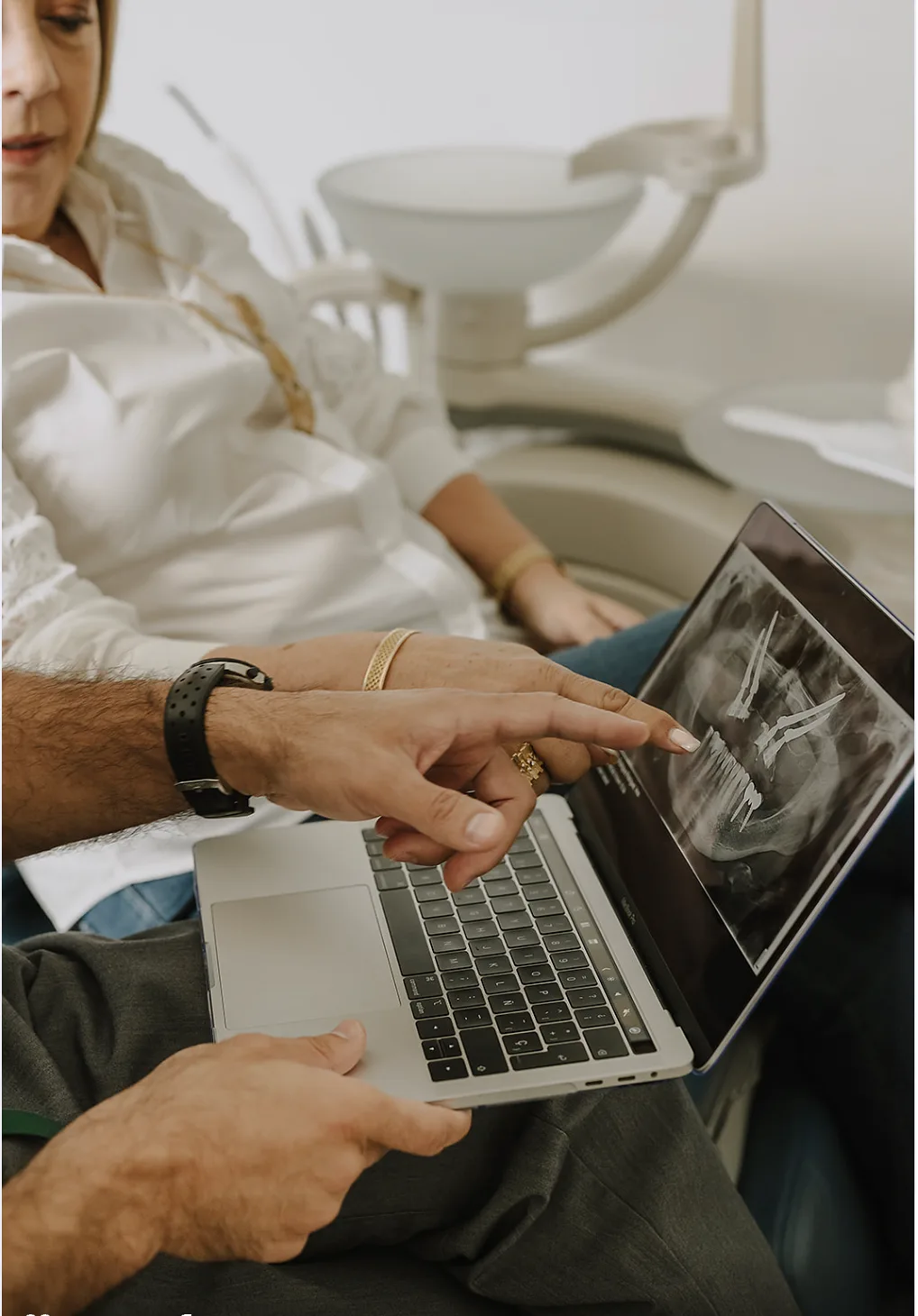
- CT scan of bone and sinus
- Socket preservation
- 3–6 months to the implant
- Sinus, lateral window
- 4–9 months to the implant
Approximate values: every case is different and your plan confirms them at the consultation.
After an extraction, the bone that held the tooth is gradually reabsorbed. In the upper jaw, the maxillary sinus also tends to take over that space. The result is an area with too little height or width for an implant.
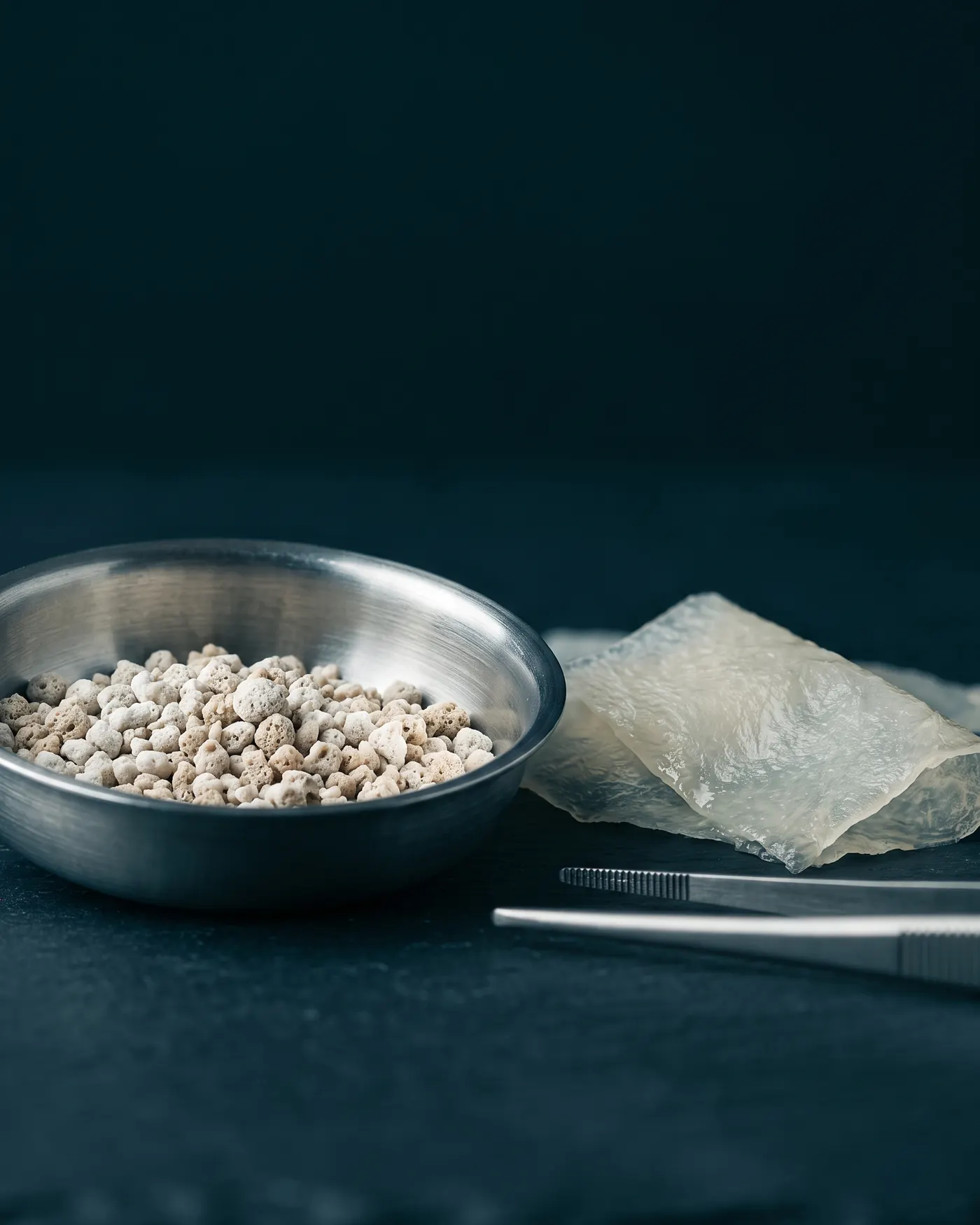
Guided bone regeneration places a graft material—the patient's own, bovine, tissue-bank or synthetic—covered with a membrane, so the body forms new bone there. A sinus lift does the same upwards: it lifts the sinus membrane and fills underneath.
- 01You were told you lack bone for an implantgrafting is usually the step that makes it possible.
- 02You are having a tooth out and want an implant laterpreserving the socket at the same visit keeps the bone.
- 03An upper molar has been missing for a whilethe sinus may have dropped; the CT scan shows it.
Three techniques, depending on where bone is missing.
The CT scan decides the technique: how much bone there is and where the sinus sits.
- 01At the extraction
Socket preservation
The socket is filled right after the tooth comes out so the bone is not lost. The implant follows 3 to 6 months later.
- 02Lateral window
Lateral sinus lift
A small window in the sinus wall allows the membrane to be lifted and the graft placed. Used when a lot of height is missing; the implant usually follows months later.
- 03From the crest
Transcrestal sinus lift
The membrane is lifted through the implant site itself. Used when little height is missing and often allows the implant at the same visit.
Bone first, then the implant.
- 01BeforeCT scan
Measures bone height and width and the position of the sinus. Defines the technique.
- 02Day 0Graft
Under local anesthesia, with sedation available. The graft and membrane are placed and sutured.
- 031–2 weeksCheck-up
Healing check and suture removal if needed.
- 043–9 monthsMaturation
The graft turns into the patient's own bone. Timing depends on the technique and the size of the defect.
- 05ThenImplant
New imaging confirms the volume and the implant is placed.
What to expect afterwards
- Days 1–3
Moderate swelling and discomfort; cold packs and the prescribed medication. A bruise on the cheek may appear.
- Week 1
Soft diet on the other side. After a sinus lift: no forceful nose blowing, sneeze with the mouth open, no straws.
- Weeks 2–3
Suture removal if any; most people resume their routine.
- Months 3–9
No discomfort: the graft matures inside. Imaging check-ups.
What patients ask before deciding.
Book your consultation.
One visit to review your case with imaging and leave with a clear plan: procedure, time and recovery.