Cysts, tumours
and oral biopsy
Many lesions of the mouth and jaws are painless and turn up by chance on an X-ray. A biopsy tells what they are; that decides the treatment and the follow-up.
- Biopsy
- Under local anesthesia
- Result
- 1–2 weeks, approx., depending on the lab
- Treatment
- In the practice or in hospital, depending on the case
- Follow-up
- Imaging check-ups, sometimes for years
Approximate values: every case is different and your plan confirms them at the consultation.
It is a cavity with fluid or soft content, lined by a layer of tissue. In the jaws many arise from tissues related to the teeth and grow slowly without symptoms, until they show on an X-ray or expand the bone.
Benign jaw tumours are less common. They do not spread to other parts of the body, but they can grow and displace teeth, so they are treated too.
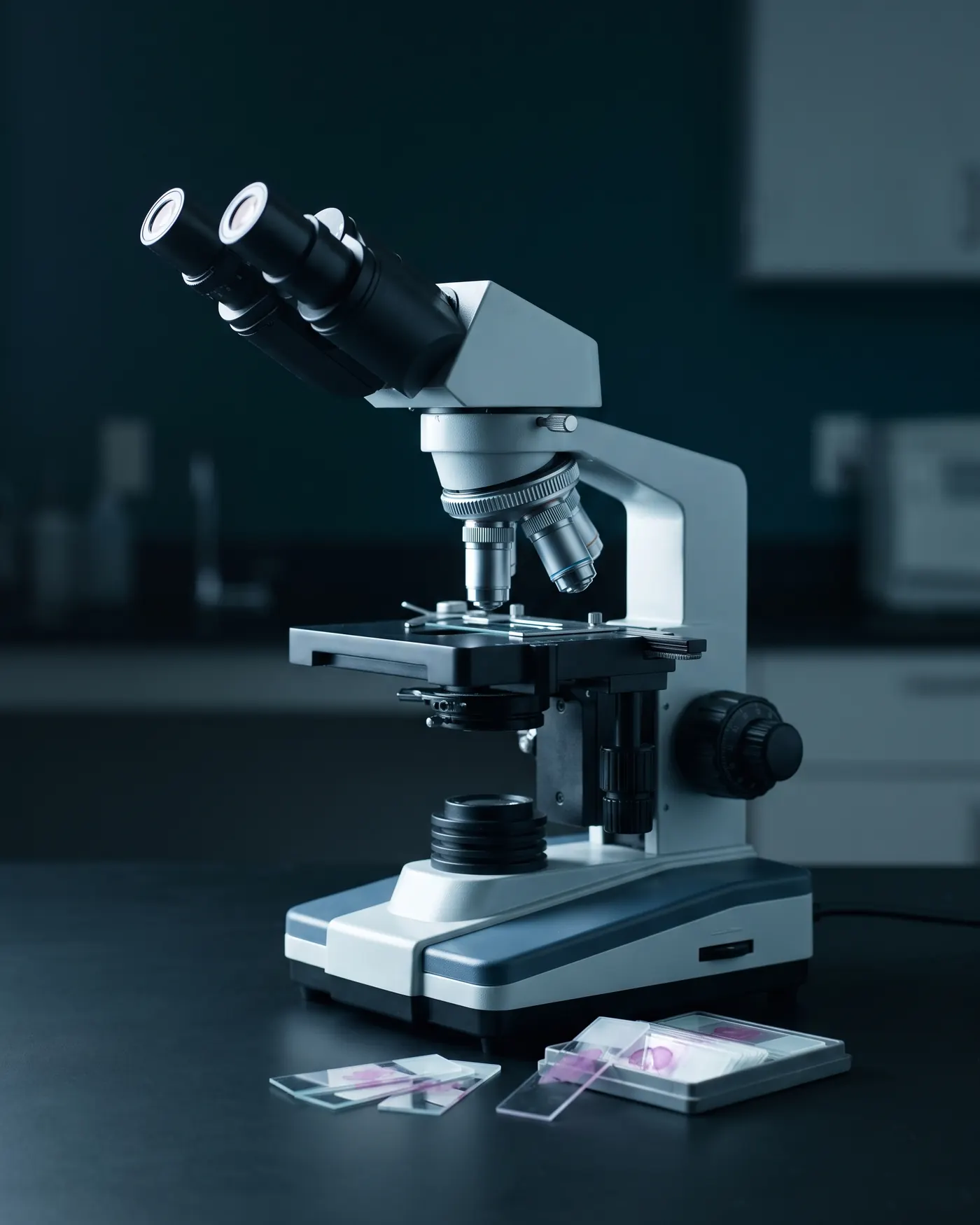
A biopsy takes a tissue sample to study under the microscope. It is the only way to know for certain what a lesion is.
- 01A sore or patch that has not healed in three weekswhite, red or raised.
- 02A lump on the gum, palate or jaweven if it does not hurt.
- 03A finding on an X-raythat your dentist wants studied.
- 04Teeth that loosen or shiftwithout a gum problem to explain it.
Many of these lesions are benign; the biopsy confirms it.
Study first, treat afterwards.
- 01Large lesions
Incisional biopsy
Part of the lesion is taken to diagnose it before deciding on treatment.
- 02Small lesions
Excisional biopsy
The whole lesion is removed and sent for study: diagnosis and treatment in one step.
- 03Cysts
Enucleation
The whole cyst is removed from the bone. It is the most common treatment.
- 04Extensive cysts
Decompression
A window is opened so the cyst drains and shrinks over months; what remains is removed later. It protects teeth and nerve in large lesions.
From the finding to the follow-up.
- 01ConsultationExamination and imaging
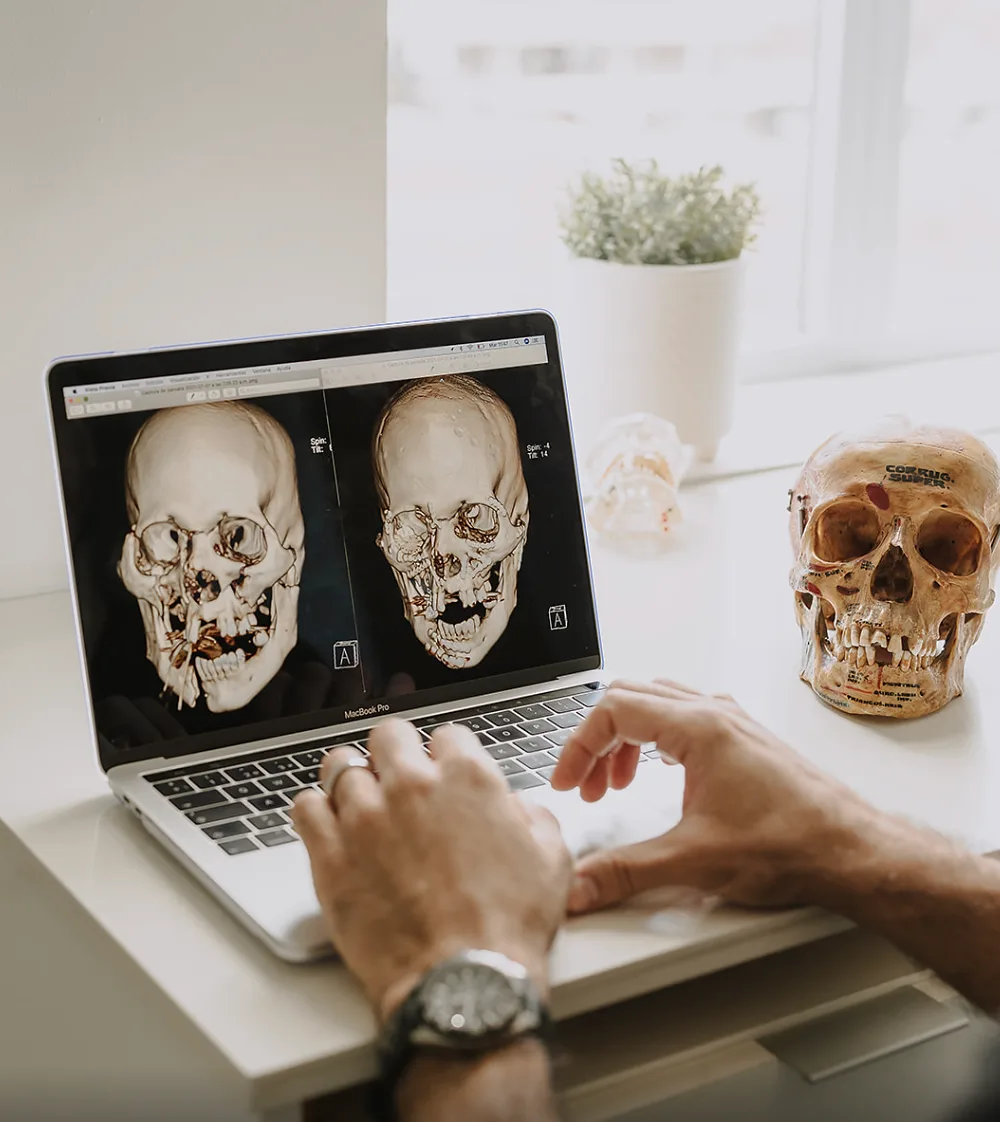
X-ray and CT scan to see the size and the relation to teeth and nerve.
- 02Day 0Biopsy
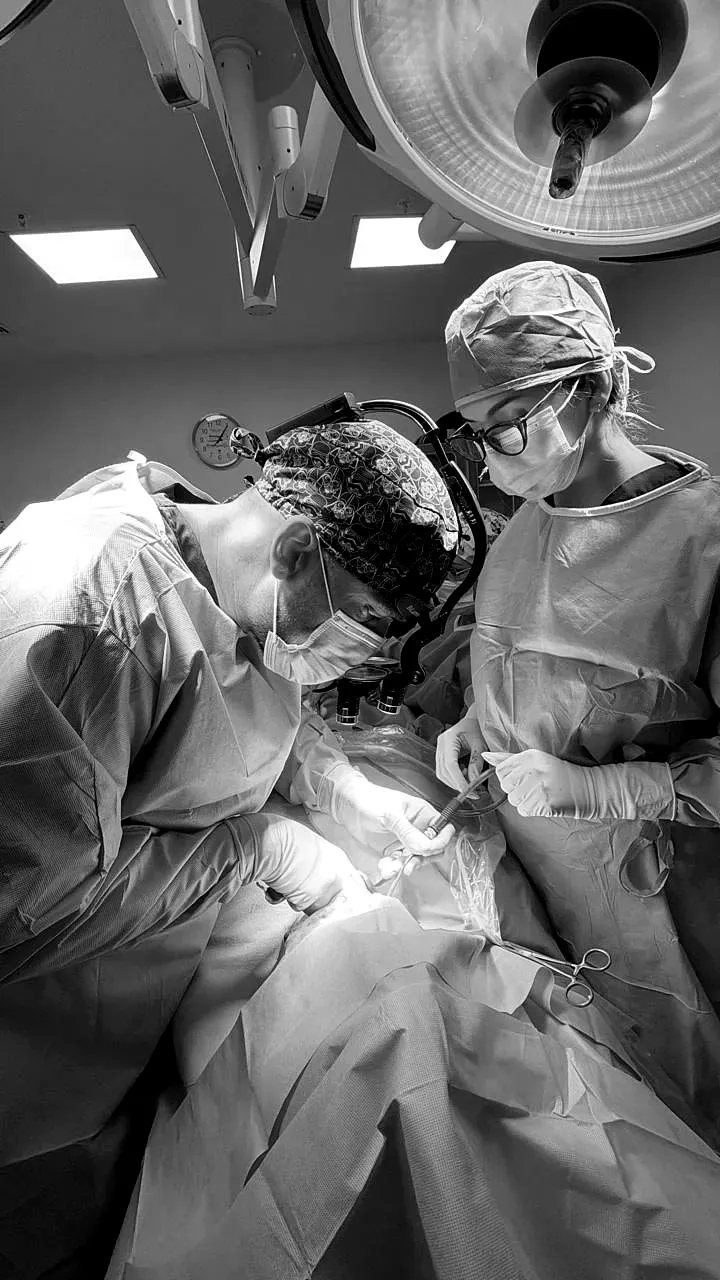
Under local anesthesia; one or two stitches. The sample goes to the pathologist.
- 031–2 weeksResult
The report is reviewed and the diagnosis and plan are explained.
- 04Depending on the caseTreatment
Enucleation, decompression or resection, in the practice or in hospital.
- 05Months–yearsFollow-up
Clinical and X-ray check-ups: some cysts can come back.
What to expect
- Day 1
Mild discomfort; cold packs and soft diet.
- Days 2–3
Gentle hygiene of the area; most people carry on with their routine.
- Week 1
Check-up and suture removal if needed.
- Weeks 1–2
Pathology result and plan.
When to seek care promptly
- A sore that has not healed in three weeks
- A lump that grows quickly
- Numbness of the lip or chin without a cause
What patients ask before deciding.
Book your consultation.
One visit to review your case with imaging and leave with a clear plan: procedure, time and recovery.