All-on-4:
a fixed full arch on implants
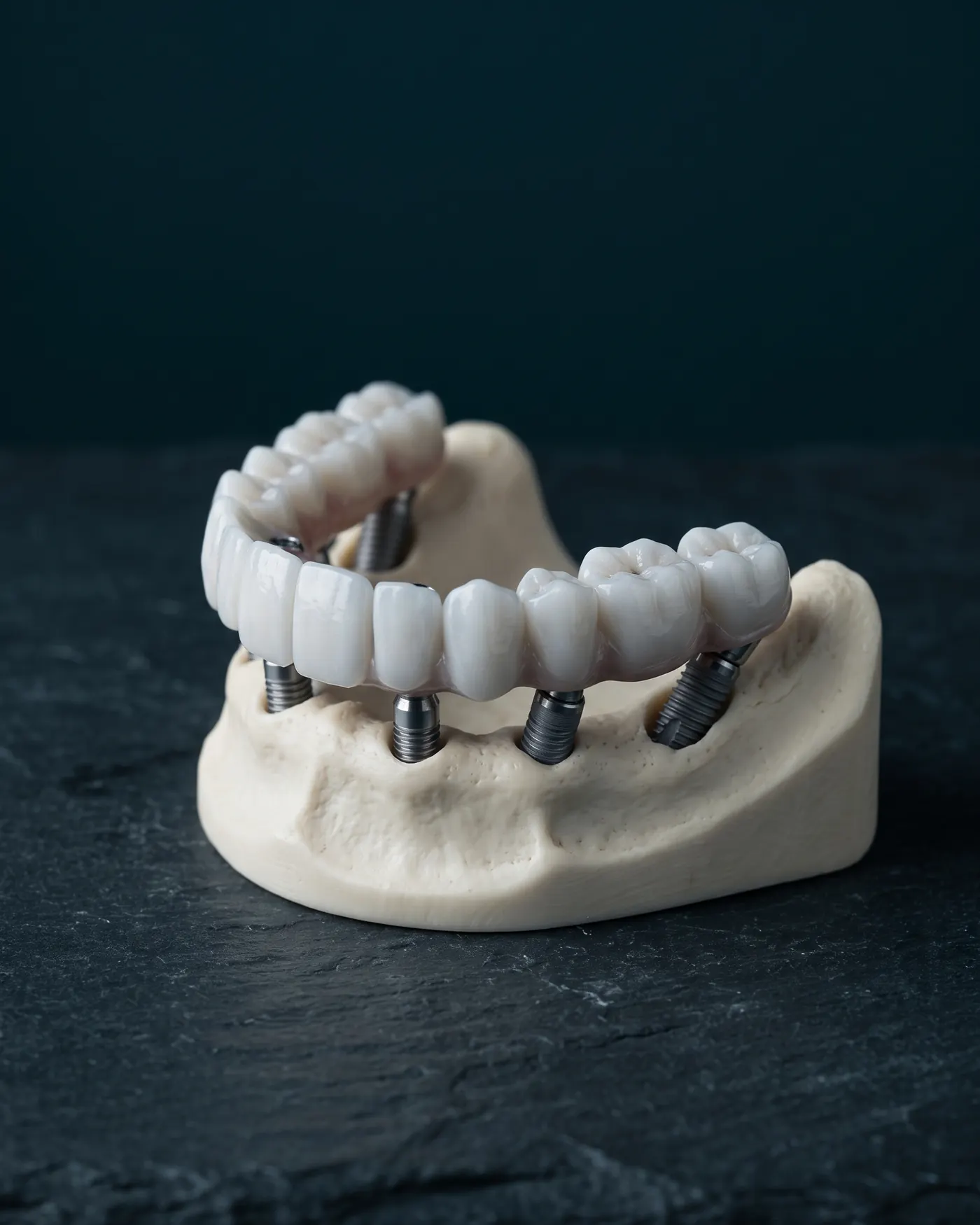
When all or almost all the teeth in an arch are missing, four to six implants can support a fixed prosthesis that does not come out to eat or sleep. In selected cases, with provisional teeth within hours or a few days.
- Anesthesia
- Local, with conscious sedation available
- Planning
- CT scan and bite registration
- Fixed provisional
- Within hours or a few days, if stable
- Final prosthesis
- At 3–6 months
Approximate values: every case is different and your plan confirms them at the consultation.
It is a full-arch rehabilitation concept: four implants—two straight at the front and two tilted at the back—support a fixed prosthesis for the whole arch. Tilting the back implants uses the available bone and, in many cases, avoids the maxillary sinus above or the nerve below.
“All on X” is the general name: depending on bone and bite, the prosthesis may rest on four, five or six implants. The idea stays the same: a fixed arch, screwed to the implants, that only the specialist removes for maintenance.
- 01You have lost all the teeth in one archor the remaining ones cannot be saved.
- 02You wear a removable denture and cannot adaptit moves, hurts when eating or changes how you speak.
- 03You were told you do not have enough bonethere are options without extensive grafting: tilted, zygomatic or subperiosteal implants.
The CT scan defines how many implants, in what position, and whether the provisional can be immediate.
Three paths for an upper jaw with little bone.
Which one fits is decided with the CT scan, not before.
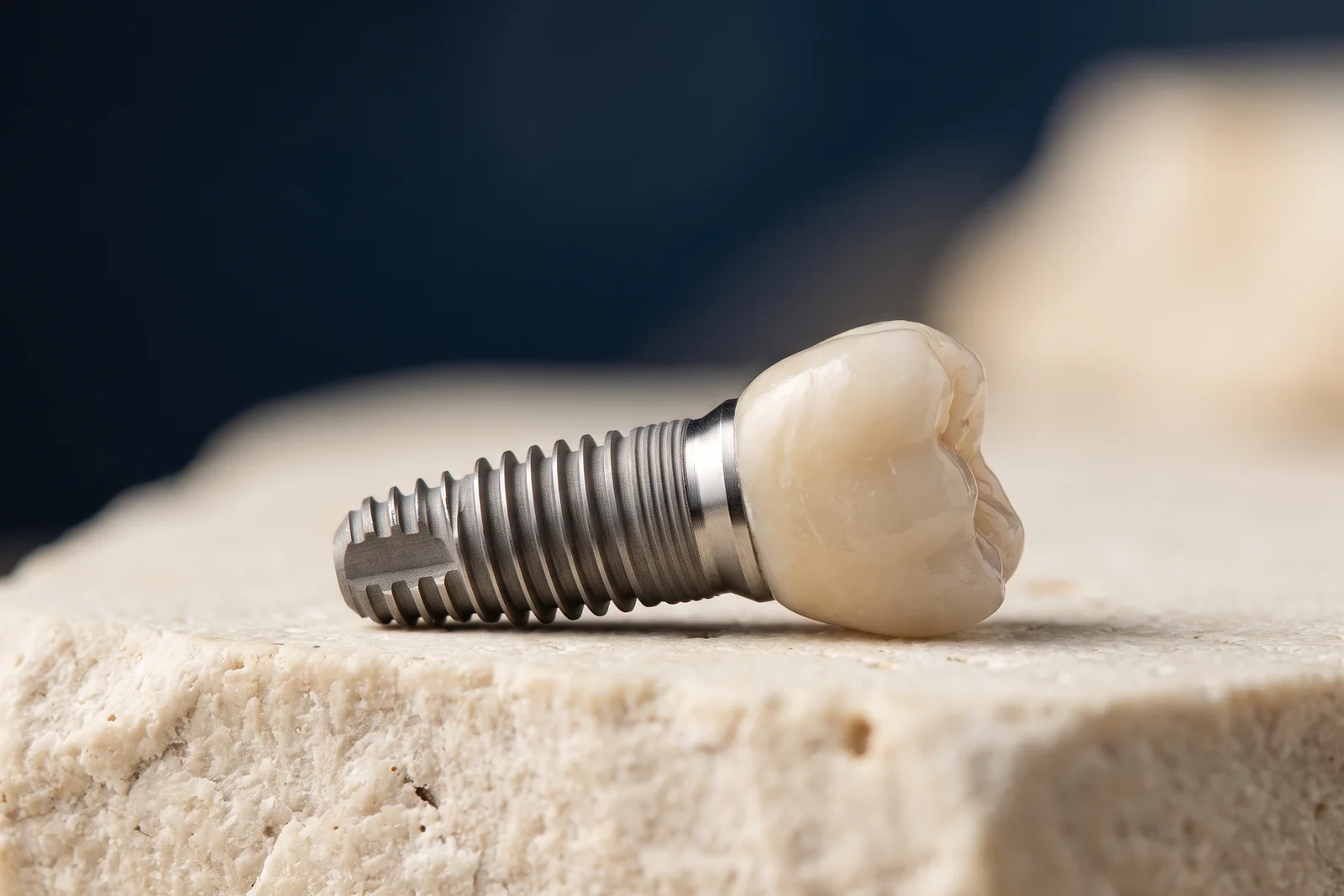
- 014–6 implants
All-on-4 / All on X
Conventional implants, the back ones tilted to use the bone that is there. It is the most common path.
- 02Cheekbone
Zygomatic implants
Long implants anchored in the zygomatic bone when the upper jaw has very little bone. In selected cases they avoid extensive grafting. They usually require sedation or general anesthesia.
- 03Custom design
Subperiosteal implants
A titanium framework designed on the patient's CT scan that rests on the bone, under the periosteum. An option for severe atrophy when the others are not viable.
From the CT scan to a fixed arch.
- 01BeforeConsultation and CT scan
Examination, 3D imaging and bite registration. How many implants and where is defined.
- 02BeforePlanning
The position of each implant and the provisional prosthesis are designed before surgery.
- 03Day 0Surgery
Extractions if needed and implant placement. If stable, records are taken for the provisional.
- 04Hours–daysFixed provisional
A screwed provisional prosthesis while the implants integrate with the bone.
- 053–6 monthsFinal prosthesis
Once integration is confirmed, records are taken and the final prosthesis is placed.
What to expect afterwards
- Days 1–3
Swelling and discomfort, managed with cold packs and the prescribed medication.
- Week 1
Soft diet; swelling goes down. First check-up.
- First weeks
A soft diet that widens as indicated: the provisional is not for biting hard.
- Months 3–6
Integration with the bone and move to the final prosthesis.

What patients ask before deciding.
Book your consultation.
One visit to review your case with imaging and leave with a clear plan: procedure, time and recovery.