Sleep apnoea:
when the airway is about bone
In obstructive apnoea the airway closes during sleep. The first treatment is CPAP; when it is not tolerated or not enough, moving the jaws forward enlarges the airway from its structure.

- Diagnosis
- Sleep study (polysomnography)
- First line
- CPAP
- Surgery
- In hospital, under general anesthesia
- Planning
- CT scan of the airway and jaws
Approximate values: every case is different and your plan confirms them at the consultation.
During sleep the throat muscles relax. In obstructive apnoea the airway narrows or closes again and again: oxygen drops, sleep is interrupted, and snoring, tiredness and daytime sleepiness appear.
CPAP—a mask that keeps the airway open with pressurised air—is the first-line treatment. Sleep medicine guidelines recommend considering surgery for people who cannot tolerate or do not accept it.
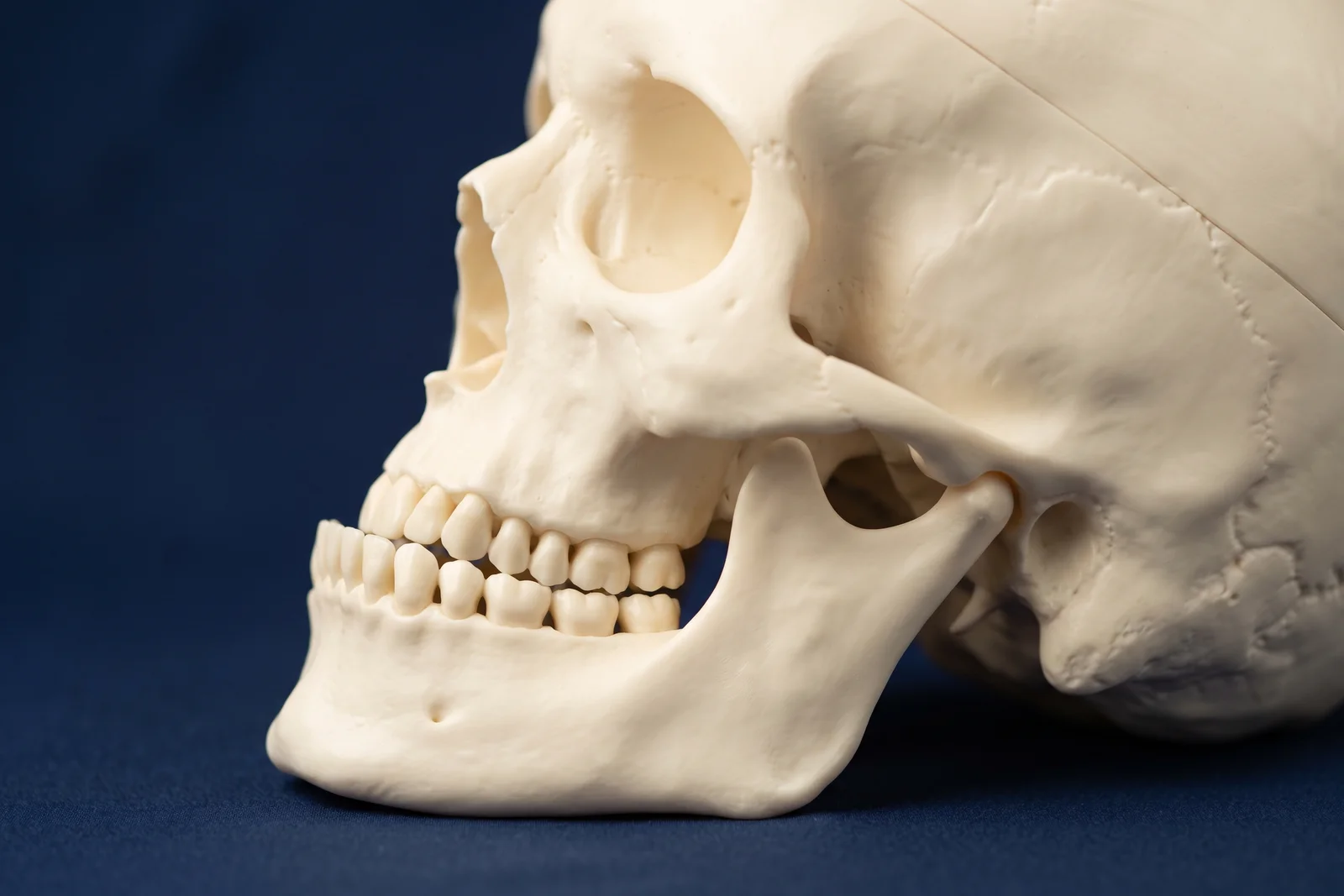
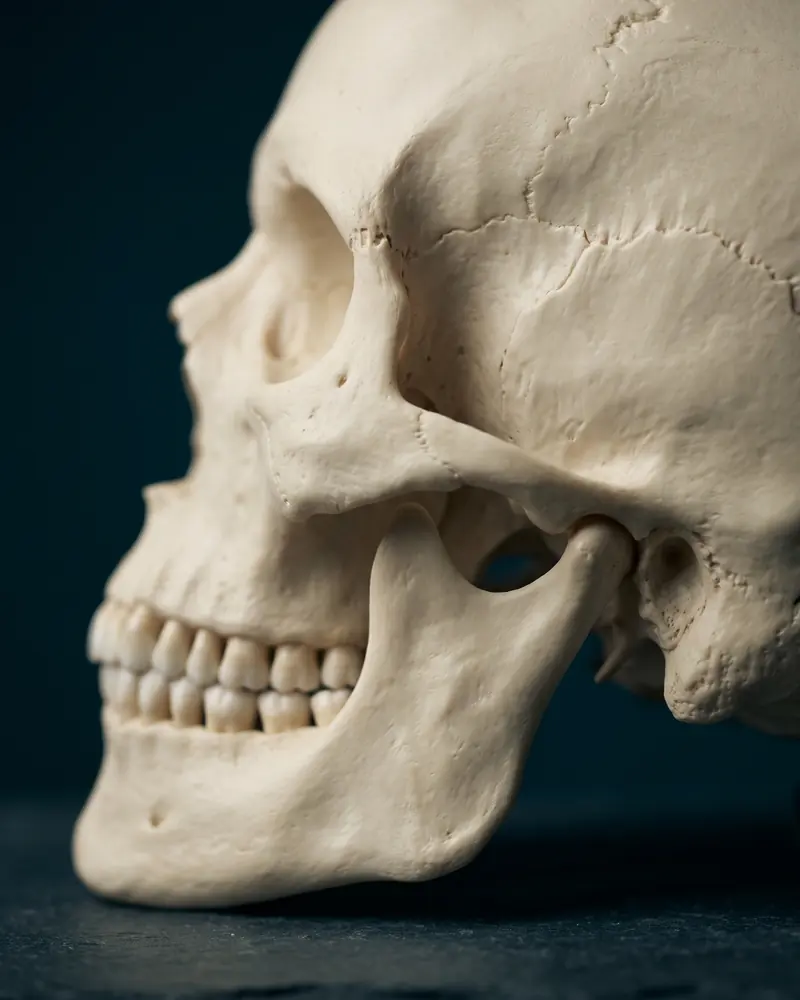
Maxillomandibular advancement moves the upper and lower jaws forward, and with them the tongue and throat tissues: the airway widens along its whole length. In selected patients it is the surgery with the best results for apnoea.
- 01Moderate or severe apnoeaconfirmed by a sleep study.
- 02You cannot tolerate CPAPor it does not work as it should.
- 03A small or set-back jawthat narrows the airway.
- 04With sleep medicineand, if relevant, ENT.
Apnoea is diagnosed by sleep medicine; surgery is one of the options in the plan.
From the mask to surgery.
The choice depends on severity, anatomy and what each person tolerates.
- 01First line
CPAP
Pressurised air during sleep. Prescribed and adjusted by sleep medicine.
- 02Mild to moderate apnoea
Mandibular advancement device
A splint that holds the lower jaw forward while you sleep.
- 03Surgery
Maxillomandibular advancement
The upper and lower jaws are moved forward with planned bone cuts and fixed with titanium plates.
- 04Complementary
Chin advancement
Moves forward the point where the tongue attaches; sometimes combined with maxillomandibular advancement.
From the sleep study to the follow-up study.
- 01BeforeSleep study
Polysomnography and assessment by sleep medicine.
- 02ConsultationMaxillofacial assessment
CT scan of the airway and jaws; we plan how far to advance.
- 03Day 0Surgery
In hospital, under general anesthesia, with a short stay.
- 04Weeks 1–6Recovery
Soft diet and check-ups; swelling goes down over the first weeks.
- 05MonthsFollow-up sleep study
Polysomnography is repeated to measure the result.
What to expect
- Days 1–3
Swelling peaks; short hospital stay.
- Weeks 1–2
Liquid to soft diet; swelling starts to ease.
- Weeks 2–6
Soft diet; gradual return to routine.
- Months
Follow-up sleep study.
When to seek care promptly
- Someone notices you stop breathing while asleep
- You get sleepy while driving
- You snore loudly and wake up choking

What patients ask before deciding.
Book your consultation.
One visit to review your case with imaging and leave with a clear plan: procedure, time and recovery.